
A tale as old as time…One household. Three opinions. And absolutely no agreement about the temperature.
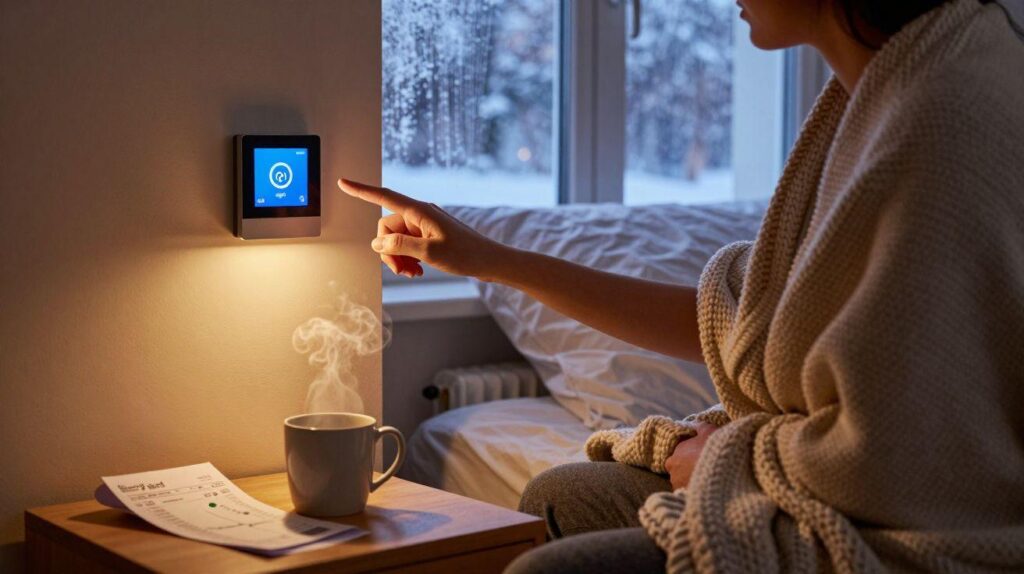
There are a few things that can test the peace of a household. Loading the dishwasher incorrectly. Leaving cabinet doors open. Putting an empty milk carton back in the refrigerator.
And then there is the thermostat.
By November in Montana, the heating system is officially part of the household conversation. Someone thinks the house is freezing. Someone else insists it is perfectly comfortable. A third person has quietly opened a window because apparently 70 degrees is a personal attack.
The thermostat becomes a negotiation, a source of suspicion, and occasionally the subject of a full investigation.
Who changed it? Why is it set to 74? Wasn’t it just at 68? And why does the person who complains about being cold always seem to be standing directly in front of the open refrigerator?
Welcome to winter in Montana.
The number is only half the story.
We tend to think of indoor temperature as a fairly straightforward thing. Set the thermostat, wait for the furnace to do its job, and enjoy a comfortable house.
Except anyone who has lived in a home with a particularly sunny living room, a chilly upstairs bedroom, or a basement that feels like a walk-in cooler knows it is rarely that simple.
Two houses can have the exact same thermostat setting and feel completely different.
Insulation, windows, air leakage, ceiling height, heating system design, and even the layout of a home can affect how evenly temperatures are distributed. A south-facing room might be practically tropical by midafternoon while another room never seems to catch up.
And in Montana, where the difference between a sunny November afternoon and a bitterly cold night can be considerable, those little details become much more noticeable.
The house has its own personality.
Some homes seem to hold heat effortlessly. Others have a favorite cold corner that nobody can explain.
Older homes can come with beautiful character, original woodwork, interesting layouts, and windows that have been around longer than most of the neighborhood. They can also have insulation or air-sealing needs that newer homes may not.
Newer construction can offer improved energy efficiency, but that does not automatically mean every room will maintain the same temperature. Ventilation, insulation quality, window placement, and proper HVAC design still matter.
The point is that comfort is not determined by the thermostat alone.
It is also one of those things buyers may not fully appreciate until they have spent a few weeks living in a home through a Montana winter.
A house can look beautiful in July. November is when you start learning how it actually behaves.
A few things worth paying attention to.
If you are shopping for a home during the colder months, winter can offer a useful opportunity to notice things that might be easy to overlook during warmer weather.
Pay attention to whether certain rooms feel noticeably colder than others. Notice how quickly the home warms up and whether you hear unusual noises from the heating system. Ask about the age and maintenance history of the furnace, the condition of the windows, and any known insulation or heating concerns.
A home inspection can help identify potential issues, but your own observations during a showing are worth making note of, too.
And if you already own a home, a few simple habits can help keep things comfortable. Replace furnace filters according to the manufacturer’s recommendations, keep vents unobstructed, and have your heating system professionally maintained. If one room is consistently uncomfortable, it may be worth having the system evaluated rather than simply turning up the thermostat for the entire house.
Sometimes the problem is not that the house needs more heat. It is that the heat is not getting where it needs to go.
So, what is the correct temperature?
This is where we are going to stay out of it.
There are recommendations for energy efficiency, manufacturer guidelines, and plenty of opinions about the ideal indoor temperature. But there is no universal thermostat setting that will make every household happy.
Some people sleep better in a cool bedroom. Others want the house warm enough to walk around barefoot in January. Some are perfectly content wearing socks and a sweatshirt. Others consider that an unacceptable living arrangement.
And if you live with someone who insists on changing the thermostat every time they walk past it, well, we wish you strength this winter.
The truth is, a home should work for the people living in it. Comfort is part of that equation, even if reaching an agreement about it requires a little diplomacy.
So as Montana settles into another winter, here’s to warm houses, properly functioning furnaces, windows that seal tightly, and households that can reach a peaceful agreement somewhere between 66 and 74 degrees.
And if all else fails, perhaps we can agree on one thing:
Nobody touches the thermostat without announcing it first.