
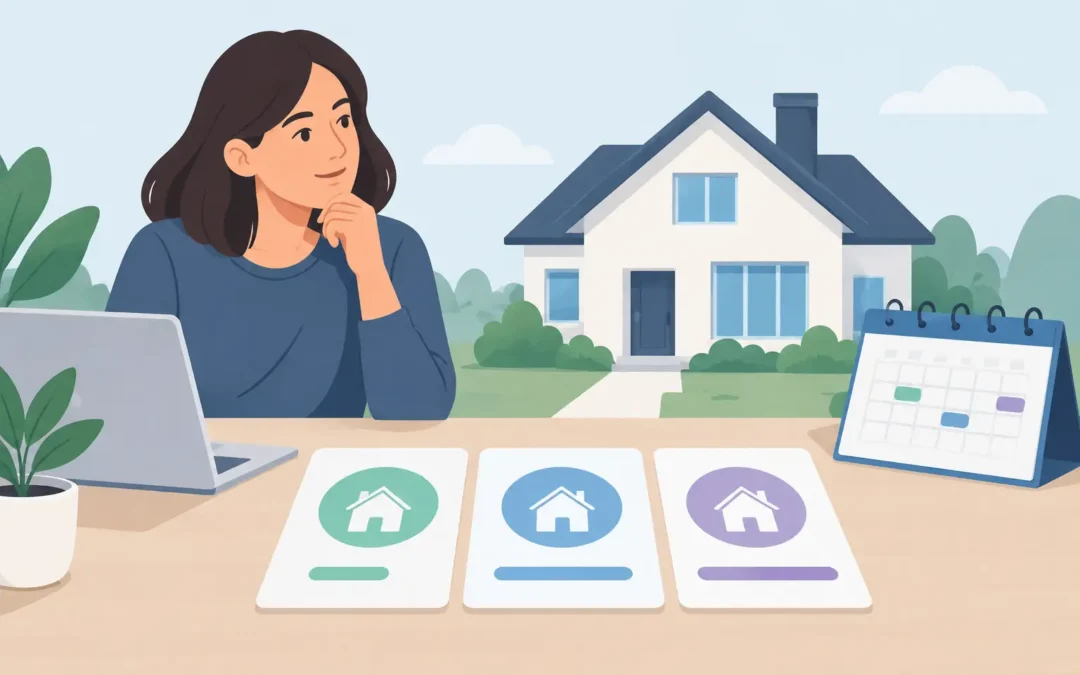
A mortgage term can change far more than your monthly payment. It affects how quickly you build equity, how much interest you pay over time, and how much flexibility your household has when life changes. For Billings buyers, knowing how to choose a mortgage term starts with an honest look at the home you want, the payment you can comfortably manage, and how long you expect to keep the property.
The shortest term is not automatically the smartest choice, and the lowest monthly payment is not always the best value. The right answer depends on your income, savings, other financial goals, and plans for the next several years.
What a Mortgage Term Actually Means
Your mortgage term is the amount of time scheduled to repay the loan if you make every required payment as agreed. The most common fixed-rate options are 15-year and 30-year mortgages, though some lenders also offer 10-, 20-, and 25-year terms.
With a shorter term, you pay off the principal faster. That usually means a higher monthly payment but less total interest over the life of the loan. A longer term spreads repayment over more years, reducing the required monthly payment but typically increasing the total interest paid.
For example, two buyers may purchase similarly priced homes in Billings with the same down payment. The buyer with a 15-year loan may have a significantly larger monthly payment, while the buyer with a 30-year loan may retain more room in the monthly budget for repairs, retirement savings, childcare, or a future move.
The mortgage term is separate from the interest rate, although the two are connected. Shorter-term loans often carry lower rates than longer-term loans, but a lower rate does not always offset the impact of a much higher payment.
How to Choose a Mortgage Term Based on Your Budget
Start with the full monthly housing cost, not just the principal and interest payment shown in a loan quote. Your actual payment may also include property taxes, homeowners insurance, mortgage insurance when applicable, and homeowners association dues for a condo or planned community.
In Montana, homeowners should also leave room for the realities of owning property through every season. Heating costs, snow removal, roof maintenance, rural road access, well or septic upkeep, and repairs can all shape a comfortable budget. A payment that looks manageable on paper can become stressful if it leaves no margin for routine ownership costs.
A practical question is not, “Can I qualify for this payment?” It is, “Can I make this payment while continuing to live the way I need to live?” That includes saving for emergencies, maintaining retirement contributions, handling vehicle expenses, and covering the costs that come with a growing family, a job change, or a new business.
If a 15-year payment would force you to use most of your available cash each month, a 30-year mortgage may provide a healthier balance. You can often make extra principal payments when your budget allows, provided your loan does not include a prepayment penalty. That approach gives you the option to pay down the loan faster without committing to a higher required payment every month.
Compare the Common Mortgage Term Options
A 15-year mortgage
A 15-year mortgage is often a strong fit for buyers with stable income, substantial savings, or a clear goal of entering retirement without a housing payment. Because the balance is repaid faster, equity builds quickly. This can be especially appealing for buyers who plan to stay in a home long term or who are downsizing and bringing meaningful equity from a previous property.
The trade-off is simple: the payment can be considerably higher. A buyer should not select a 15-year term solely because it saves interest if doing so limits the ability to handle an unexpected repair or reduces other essential savings.
A 30-year mortgage
A 30-year fixed mortgage offers the lowest required payment among the standard fixed-rate terms. It gives many first-time buyers the breathing room needed to purchase a home without stretching every dollar. It can also make sense for buyers who prefer to invest extra cash, build reserves, fund education, or keep flexibility for business and family priorities.
The downside is that more of the early payments go toward interest, and total interest costs can be higher if the loan is held for all 30 years. Still, many homeowners sell, refinance, or make additional principal payments before reaching the end of the term. The right comparison is based on your likely path, not only a 30-year interest total.
A 20- or 25-year mortgage
A middle-length term can offer a useful compromise. The payment is generally lower than a 15-year loan but higher than a 30-year loan, while total interest may be reduced compared with a 30-year schedule. These options are worth asking about if you have room for a moderately higher payment but do not want the pressure of a 15-year obligation.
Availability varies by lender, so compare the actual rates, fees, and payment estimates rather than assuming a middle term will always be the better deal.
Consider How Long You Expect to Own the Property
Your expected time in the home matters because it changes how you should evaluate interest costs and loan features. A buyer purchasing a starter home and expecting to move within five to seven years may prioritize payment flexibility, location, and the ability to save for the next down payment. In that situation, the lifetime interest calculation is less relevant than the cost during the years you reasonably expect to own the home.
A buyer purchasing acreage, a ranch property, or a forever home outside Billings may have a different outlook. If you expect to stay for decades, paying down principal sooner may carry more weight. You may also care more about building equity for retirement or reducing future monthly obligations.
Of course, plans change. A job opportunity, family needs, or market conditions can alter your timeline. Choose a payment that still feels workable if your original plan takes longer than expected.
Fixed-Rate Loans and Adjustable-Rate Mortgages
A fixed-rate mortgage keeps the interest rate and principal-and-interest payment stable for the life of the loan. Taxes and insurance can still change, but the loan portion remains predictable. For buyers who value consistency, especially those planning to stay in the home for many years, this predictability is often reassuring.
An adjustable-rate mortgage, commonly called an ARM, has a fixed rate for an initial period and then can adjust based on market conditions. It may offer a lower introductory rate, which can be useful for a buyer with a clear, realistic plan to sell or refinance before the adjustment period begins.
An ARM should not be chosen simply because it creates the lowest payment today. Review the adjustment schedule, rate caps, and the highest possible payment after the fixed period. If the future payment would be difficult to absorb, a fixed-rate option may better protect your budget.
Look Beyond the Rate When Comparing Offers
Mortgage decisions should be based on loan estimates, not advertisements. Two loans with similar rates can have different closing costs, lender credits, discount points, and monthly payments. Ask each lender to show the payment at the same purchase price and down payment so you can compare clearly.
Pay attention to whether points are being used to lower the rate. Paying points can make sense when you expect to keep the loan long enough to recover that upfront cost. If you may sell or refinance soon, paying more at closing for a slightly lower rate may not pay off.
It is also wise to compare whether a shorter term would require you to reduce your down payment. A larger down payment can lower the loan amount and may eliminate mortgage insurance, so the decision is not always as simple as choosing the fastest payoff schedule.
Use Your Homebuying Team as a Reality Check
Your lender can explain available terms, rates, and qualification details. Your real estate professional can help you connect the financing decision to the homes you are considering, local taxes, property condition, and your goals for the move.
At The Real Estate Hub, we see that the most confident buyers do not chase a single “best” mortgage product. They choose a financing structure that supports the home they want and leaves room for the life they want to live in it.
Before writing an offer, run a few payment scenarios at different terms and interest rates. Then consider the purchase with your real monthly budget in mind, including the costs that may arrive after closing. A mortgage term should help your home feel like a secure place to build your next chapter, not a payment that keeps you from enjoying it.